

Why After-Hours Support Isn't Just a Vendor Problem
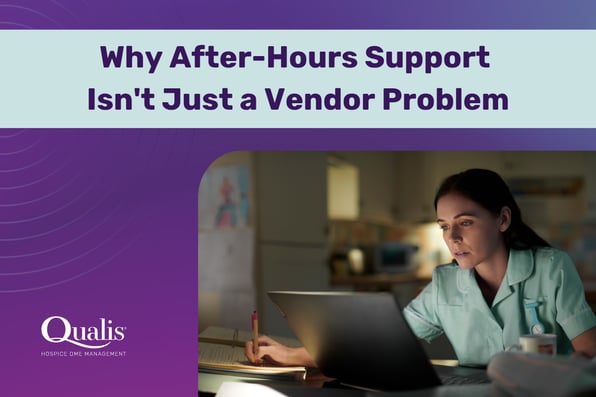
Hospice care doesn’t end at 5 p.m. Neither do the responsibilities that come with it. When a patient needs equipment at 9 p.m. on a Friday or the oxygen concentrator starts alarming on a Sunday morning, the person answering the call isn’t always a vendor — it’s often a nurse.
These moments can feel isolating. A nurse is standing in a family’s living room, trying to explain where the bed is or why the concentrator is delayed. The family looks to them for answers, even if the equipment issue was out of their control.
This isn’t just about vendor responsiveness. It’s about the structure surrounding the clinical team and how well that structure holds up after hours.
What Happens After 5 p.m.
In many hospice organizations, after-hours equipment issues fall into a gray area. Orders placed late in the day may not be fulfilled until the next business morning. Weekend requests may get routed to a voicemail. Follow-ups get postponed. Meanwhile, the patient is still in need, and the nurse on call is the one left explaining the delay.
Common scenarios include:
- A hospital bed ordered Friday afternoon that doesn’t arrive before end of day
- A concentrator failure discovered during a night visit
- A wound vac delivery that never made it to the home
- A mattress setup that was done incorrectly or not at all
- A new admission without the needed supplies
Each of these moments puts pressure on the nurse to solve something they didn’t create, using tools they may not have. And families don’t separate the vendor from the nurse. They just see someone wearing a name badge and assume that person can fix it.
Where the Model Breaks Down
Many vendor-based systems are built for standard hours. They rely on clinicians to fill in the gaps after hours, which leads to:
- Increased nurse stress
- More calls and follow-ups
- Delays in care
- Frustrated families
- Risk of missed documentation or safety concerns
When there’s no clear support structure in place, equipment issues become nursing issues. And nursing time, especially during off-hours, is too valuable to be spent chasing deliveries or managing service calls.
Support That Protects the Clinical Team
Hospice clinicians need more than a phone number for equipment help. They need a model that wraps around them, not just during the day, but every hour care is being delivered.
That kind of support includes:
A Team That Stays Engaged
After-hours coverage should not mean handing off to someone unfamiliar with the patient or the plan. The support structure needs to stay connected to what’s happening clinically, not just operationally.
Proactive Communication
If an order is delayed, the nurse should know before walking into the home. If a piece of equipment can’t be delivered that day, the family should hear that clearly and early. Nurses should not have to deliver bad news they weren’t told about.
Visibility Across Shifts
When weekend teams inherit unresolved DME problems, it slows down everything. The right structure allows for clean handoffs, where notes, orders, and open issues are visible to whoever picks up the next shift.
A Way to Escalate
Not everything can wait. Nurses need a clear process when something truly urgent comes up, one that does not rely on hoping someone answers the phone.
The Weekend Shouldn’t Feel Like a Gamble
Weekend admissions are a critical part of hospice. Delays or missed equipment on Saturday morning can set the tone for an entire patient and family experience. First impressions matter, especially in hospice, where every moment counts.
A well-structured support system doesn't treat nights and weekends as exceptions. It views them as essential parts of the care cycle.
Reclaiming Nurse Time, Even Off the Clock
After-hours care is already challenging. Adding unnecessary friction from unclear equipment workflows makes it harder. Nurses should not be writing workarounds into shift notes or hoping someone will catch the gap on Monday.
Better structure means fewer of those moments. It means nurses spend more time focused on care and less time trying to manage equipment logistics from the field.
Not Just Faster, But Smarter
Fast is good, but predictable is better. Nurses and families want to know when something is coming, who to call, and what to expect. That kind of confidence only comes from a model that is built around real clinical needs, not just delivery timelines.
Hospice never closes. The support surrounding it shouldn’t either.
If after-hours equipment issues are creating pressure for your team, it may be time to revisit the structure behind your support. Nurses should not be the backup plan. They should be backed up - every hour of every day.
Get Awesome Content Delivered Straight to Your Inbox!
.webp?width=800&height=800&name=CAHPS-Whitepaper_Download%20(2).webp)
.png?width=596&name=Qualis_blog_templates%20(25).png)
.png?width=596&name=Qualis_blog_templates%20(23).png)
.png?width=596&name=Qualis_blog_templates%20(21).png)